
Common Conditions

LOW BACK PAIN
Physiotherapy-Led Care for Pain Relief, Mobility & Long-Term Recovery mLow back pain is one of the most common reasons people seek physiotherapy and one of the most misunderstood.
At RedGen Rehab, the focus is on understanding why your back pain developed, what structures may be contributing, and how to restore movement and confidence safely, rather than simply chasing symptoms.
Whether your pain is acute, persistent, activity-related, or limiting your lifestyle, the goal is to help you move more comfortably again and reduce the risk of
recurrence.
Where People Commonly Feel Low Back Pain
- Low back pain can present in different ways, including:
- central lower back pain
- stiffness or aching after sitting or standing
- pain with bending, lifting, or twisting
- pain referring into the hips or buttocks
- sharp episodes during movement
- morning stiffness or pain after rest
- Some people also experience symptoms travelling into the leg, which may suggest nerve involvement and requires careful assessment.
Common Contributors to Low Back Pain
- Low back pain rarely has a single cause.
- Common contributing factors include:
- muscle strain or overload
- joint stiffness or irritation
- disc-related issues
- nerve sensitivity
- prolonged sitting or reduced movement tolerance
- reduced core or hip strength
- previous injury or recurring flare-ups
- increased training load, work demands, or stress
- Understanding your specific contributors is key to successful recovery.
The RedGen Approach to Low Back Pain
- Treatment follows the RedGen 4-Step Rehabilitation Framework: Assess, Relieve, Restore and Optimise a structured system designed to reduce pain, rebuild strength, and restore long-term confidence in movement.
- Your rehabilitation may include:
- hands-on physiotherapy and soft tissue techniques
- joint mobilisation to improve movement
- acupuncture or dry needling where appropriate
- Class IV laser therapy when clinically indicated
- RedGen Prime™ full-body photobiomodulation to support inflammation control and recovery where appropriate
- progressive rehabilitation tailored to your tolerance, work, training, and goals
- The aim is not to avoid movement, but to restore confidence in it.
When to Seek Help
- You should consider physiotherapy if:
- pain is not improving
- symptoms are recurring
- movement feels restricted or unsafe
- pain affects work, sleep, or training
- you want to reduce the risk of the problem returning
- Early assessment often leads to faster, more confident recovery.
Book a Low Back Pain Assessment
- If back pain is limiting your life, RedGen Rehab can help.

NECK PAIN
Restore Movement, Reduce Tension & Regain Confidence Neck pain is increasingly common particularly in people who work at desks, train regularly, or experience prolonged stress.
At RedGen Rehab, neck pain is managed through a calm, structured,physiotherapy-led approach focused on restoring movement, reducing tension,and identifying contributing factors beyond just the neck itself.
How Neck Pain Commonly Presents
Neck pain may include:
• stiffness or aching in the neck or shoulders
• pain turning or tilting the head
• headaches linked to neck tension
• pain between the shoulder blades
• arm discomfort or nerve-related symptoms
• pain worsened by sitting or poor sleep positions
Each presentation requires careful assessment to determine whether symptoms
are muscular, joint-related, or nerve-driven.
Common Contributors to Neck Pain
Neck pain often develops due to a combination of:
• prolonged sitting or screen use
• postural fatigue rather than “bad posture”
• stress and tension
• reduced upper back mobility
• shoulder or thoracic stiffness
• previous injury or flare-ups
• gym or training overload
Neck pain is rarely isolated, which is why assessment extends beyond the neck
alone.
The RedGen Approach to Neck Pain
Your rehabilitation may include:
• hands-on physiotherapy and soft tissue work
• joint mobilisation of the neck and upper back
• acupuncture or dry needling where appropriate
• Class IV laser therapy when clinically indicated
• RedGen Prime™ full-body photobiomodulation to support recovery and nervous system regulation where appropriate
• exercise rehabilitation tailored to tolerance and daily demands Treatment is adapted to your presentation never forced.
When to Seek Physiotherapy
Consider assessment if:
• neck pain persists or recurs
• headaches are becoming frequent
• arm symptoms are present
• pain affects work, training, or sleep
Early input often prevents chronic issues from developing.
Book a Neck Pain Assessment
If neck pain is limiting your comfort or performance, RedGen Rehab can help.

HIP PAIN
Physiotherapy-Led Care for Pain Relief, Strength & Confident Movement Hip pain can affect walking, sitting, sleeping, training, and everyday movement often more than people realise until it begins to limit daily life.
At RedGen Rehab, hip pain is approached by identifying where the pain is coming from, what movements aggravate it, and which structures are contributing, rather than treating the hip as a single joint problem.
Whether your pain is sharp, aching, stiffness-related, or gradually worsening, the aim is to restore comfortable movement and long-term confidence.
Where People Commonly Feel Hip Pain
Hip pain can present in several distinct areas, including:
• pain in the groin or front of the hip
• pain on the outside of the hip
• deep aching in the buttock
• stiffness when standing up or walking
• pain during running, squatting, or climbing stairs
• discomfort when lying on one side at night
The location of pain often gives important clues about the underlying cause.
Common Contributors to Hip Pain
Hip pain rarely has one single cause.
Common contributors include:
• Greater Trochanteric Pain Syndrome (GTPS)
• gluteal tendon overload or weakness
• hip joint stiffness or irritation
• cartilage or early osteoarthritic changes
• reduced pelvic or lower back control
• prolonged sitting or repetitive loading
• training errors or sudden increases in activity
• previous injury or surgery
Understanding why your hip has become painful is essential for effective rehabilitation.
Common Hip Conditions Seen at RedGen Rehab
RedGen Rehab regularly assesses and treats:
• lateral hip pain (GTPS / bursitis-type pain)
• groin-related hip pain
• hip flexor or adductor overload
• early-stage osteoarthritis
• post-surgical hip rehabilitation
• hip pain related to running or gym training
• hip pain linked to lower back or pelvic mechanics
Each presentation is assessed individually — no assumptions and no generic
protocols.
The RedGen Approach to Hip Pain
Treatment follows the RedGen 4-Step Rehabilitation Framework: Assess, Relieve, Restore and Optimise.
Your rehabilitation may include:
• hands-on physiotherapy and soft tissue techniques
• joint mobilisation where stiffness is present
• acupuncture or dry needling where appropriate
• Class IV laser therapy when clinically indicated
• RedGen Prime™ full-body photobiomodulation to support inflammation control and recovery where appropriate
• early-stage exercise rehabilitation tailored to your tolerance This phase is about restoring movement not avoiding it.
When to Seek Physiotherapy for Hip Pain
Consider an assessment if:
• pain is persistent or worsening
• walking, stairs, or sleep are affected
• pain returns after activity
• you’ve reduced training or exercise because of symptoms
• you want clarity and a structured recovery plan
Early assessment often leads to faster and more confident outcomes.
Book a Hip Pain Assessment
If hip pain is affecting your movement or lifestyle, RedGen Rehab can help.

KNEE PAIN
Physiotherapy-led care focuses on relieving pain, building strength, and restoring long-term confidence in movement.
Knee pain is one of the most common reasons people seek physiotherapy, affecting everyday activities like walking, climbing stairs, exercising, and working.
At RedGen Rehab, knee pain is never treated as “just the knee.”
Each assessment looks at how the knee is loaded and moves, as well as how surrounding joints and muscles contribute, allowing for precise, effective, and lasting treatment.
Whether the pain develops suddenly or over time, the goal is always to help you move confidently again while reducing the risk of it coming back.
Where People Commonly Feel Knee Pain
Knee pain can present in several ways, including:
• pain around or behind the kneecap
• pain on the inside or outside of the knee
• pain with stairs, squatting, or rising from sitting
• stiffness after rest or in the morning
• swelling or a feeling of fullness
• instability, clicking, or locking sensations
The location and behaviour of pain help guide diagnosis and rehabilitation
planning.
Common Contributors to Knee Pain
Knee pain is rarely caused by one issue alone.
Common contributors include:
• patellofemoral pain
• meniscus irritation or injury
• ligament strain or instability
• tendon overload
• early or established knee osteoarthritis
• reduced hip or ankle control
• training load errors or sudden increases in activity
• prolonged kneeling, sitting, or repetitive strain
• previous injury or surgery
Understanding why the knee is painful is essential for effective treatment.
Common Knee Conditions Seen at RedGen Rehab
RedGen Rehab regularly assesses and treats:
• anterior knee pain / runner’s knee
• meniscus-related knee pain
• ligament injuries including MCL and ACL rehab phases
• patellar and quadriceps tendinopathy
• knee osteoarthritis
• post-surgical knee rehabilitation
• gym- and sport-related knee pain
Each knee is assessed individually — no generic protocols and no assumptions.
The RedGen Approach to Knee Pain
Treatment follows the RedGen 4-Step Rehabilitation Framework: Assess,Relieve, Restore and Optimise.
Your rehabilitation may include:
• hands-on physiotherapy and soft tissue techniques
• joint mobilisation where stiffness is present
• acupuncture or dry needling where appropriate
• Class IV laser therapy when clinically indicated
• RedGen Prime™ full-body photobiomodulation to support inflammation control and recovery where appropriate
• early-stage exercise rehabilitation based on tolerance
The aim is to keep you moving — safely and confidently.
When to Seek Physiotherapy for Knee Pain
Consider an assessment if:
• pain persists beyond a few weeks
• swelling or stiffness keeps returning
• stairs, walking, or exercise are limited
• the knee feels unstable or unreliable
• you want clarity and a structured recovery plan
Early assessment often prevents longer-term issues.
Book a Knee Pain Assessment
If knee pain is limiting your movement or activity, RedGen Rehab can help.

SHOULDER PAIN
Physiotherapy-led care focuses on improving strength, mobility, and long-term shoulder health.
Shoulder pain can impact lifting, training, sleeping, driving, and everyday tasks, and because it is the most mobile joint in the body, it is also highly vulnerable to overload, stiffness, and irritation.
At RedGen Rehab, shoulder pain is assessed thoroughly—not just at the shoulder itself, but also across the neck, upper back, and the movement patterns that influence how the shoulder functions—ensuring treatment is targeted, effective, and built for lasting results.
How Shoulder Pain Commonly Presents
Shoulder pain may present as:
• pain on the outside of the shoulder or upper arm
• deep ache within the joint
• pain at the front of the shoulder
• pain that worsens when lifting the arm overhead
• pain when lying on one side at night
• weakness or a feeling of catching or instability
• stiffness and reduced range of motion
Pain location and movement behaviour give important clues about what structures are involved.
Common Contributors to Shoulder Pain
Shoulder pain is often multifactorial.
Common contributors include:
• rotator cuff overload or weakness
• shoulder bursitis
• reduced shoulder blade control
• prolonged desk work or movement patterns that increase irritation
• training load increases or repetitive overhead activity
• reduced mobility in the thoracic spine or neck
• previous injury or periods of immobility Identifying the cause is essential to effective rehabilitation.
Common Shoulder Conditions Treated at RedGen Rehab
RedGen Rehab regularly assesses and manages:
• rotator cuff-related shoulder pain
• shoulder impingement-type pain
• subacromial bursitis
• frozen shoulder
• shoulder instability or recurrent strain
• labral irritation
• post-surgical shoulder rehabilitation
Each condition is assessed individually no assumptions and no generic protocols.
The RedGen Approach to Shoulder Pain
Treatment follows the RedGen 4-Step Rehabilitation Framework: Assess, Relieve, Restore and Optimise.
Your rehabilitation may include:
• hands-on physiotherapy and soft tissue techniques
• joint mobilisation where stiffness is present
• acupuncture or dry needling where appropriate
• Class IV laser therapy when clinically indicated
• RedGen Prime™ full-body photobiomodulation to support inflammation control and recovery where appropriate
• early-stage exercise rehabilitation matched to tolerance
The aim is to calm symptoms while keeping the shoulder moving safely.
When to Seek Physiotherapy for Shoulder Pain
Consider assessment if:
• shoulder pain persists beyond 2–3 weeks
• pain disrupts sleep
• lifting or reaching overhead is limited
• symptoms keep returning with activity
• you want clarity and a structured plan
Early intervention often leads to faster, more complete recovery.
Book a Shoulder Pain Assessment
If shoulder pain is affecting your movement or daily life, RedGen Rehab can
help.
OSTEOARTHRITIS
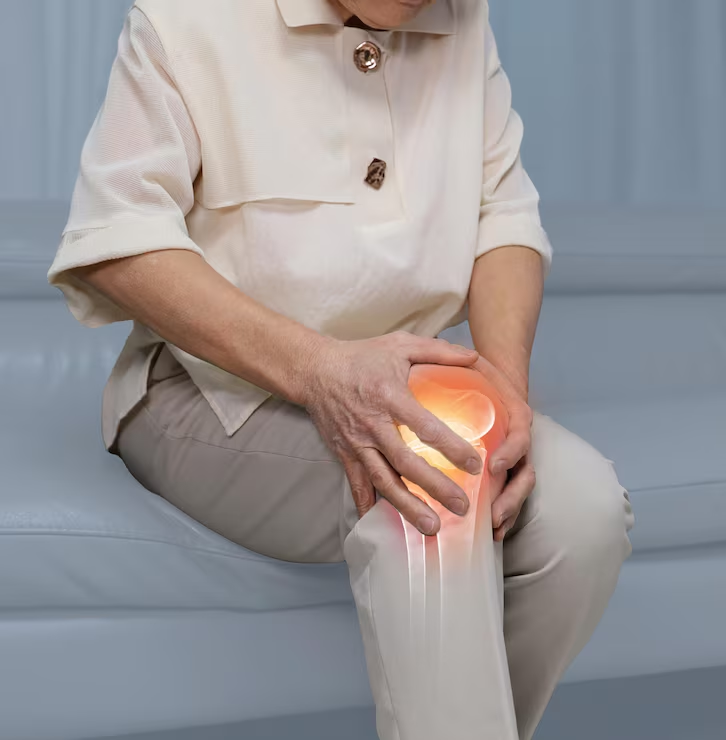
Evidence-based physiotherapy focuses on relieving joint pain, building strength, and improving long-term mobility.
Osteoarthritis is one of the most common yet often misunderstood causes of joint pain, but at RedGen Rehab, it is not treated as an inevitable decline or something you simply have to live with.
Through the right assessment, tailored movement strategies, and a structured loading plan, many people can reduce pain, improve function, and remain active for years.
What Osteoarthritis Is
Osteoarthritis involves changes to joint structures over time, including:
• cartilage thinning
• changes in bone density
• altered joint mechanics
• surrounding muscle weakness or inhibition
Pain does not directly correlate with how severe osteoarthritis looks on scans.
Many people with significant structural changes have minimal pain, while others with milder imaging findings may experience more symptoms.
Pain is often influenced by:
• joint loading
• movement patterns
• muscle strength
• inflammation
• nervous system sensitivity
• confidence in movement
This is why physiotherapy plays such a central role in osteoarthritis management.
Where Osteoarthritis Is Commonly Felt
Osteoarthritis most commonly affects:
• knees
• hips
• spine
• hands and fingers
• shoulders
Symptoms may include:
• joint stiffness, especially in the morning or after sitting
• aching or deep joint pain
• pain during or after activity
• reduced confidence loading the joint
• flare-ups with increased activity
Common Contributors to Osteoarthritis Pain
While structural changes are part of osteoarthritis, pain is often driven by:
• reduced muscle strength around the joint
• loss of joint range or movement variability
• fear of movement or avoidance
• sudden increases or decreases in activity
• long periods of inactivity
• previous injury or surgery
• flare-ups of local inflammation Understanding your contributors is key to improving symptoms.
The RedGen Approach to Osteoarthritis
Treatment follows the RedGen 4-Step Rehabilitation Framework: Assess, Relieve, Restore and Optimise.
Your rehabilitation may include:
• hands-on physiotherapy and joint mobilisation
• soft tissue work to reduce protective tension
• acupuncture where appropriate
• Class IV laser therapy when clinically indicated
• RedGen Prime™ full-body photobiomodulation to assist inflammation regulation and recovery where appropriate
• exercise rehabilitation matched to tolerance and long-term goals
The goal is not rest — it is controlled, confident movement.
When to Seek Help for Osteoarthritis
Physiotherapy can help if
• pain is limiting activity or confidence
• flare-ups are becoming more frequent
• you’ve stopped doing things you enjoy
• you want to delay or avoid surgery
• you want clarity on how to exercise safely
Osteoarthritis does not mean stopping.
It means training smarter.
Book an Osteoarthritis Assessment
If joint pain is affecting your movement or quality of life, a structured plan can make a meaningful difference.

SCIATICA & NERVE PAIN
Clear diagnosis, calm management, and progressive recovery are key when dealing with sciatic pain and nerve-related symptoms, which can often feel worrying due to travelling pain, tingling, or unpredictability.
At RedGen Rehab, nerve pain is managed with clarity, reassurance, and a structured approach, focusing on accurate assessment, targeted treatment, and graded movement to help most cases improve significantly over time.
What Sciatica & Nerve Pain Are
Sciatica describes pain originating from irritation of the sciatic nerve, usually affecting one side of the body and travelling from the lower back into the buttock, leg, or foot.
More broadly, nerve pain can involve:
• spinal nerve roots
• peripheral nerves
• increased nervous system sensitivity rather than ongoing damage Nerve pain does not automatically mean serious injury or permanent damage.
How Nerve Pain Commonly Feels
Nerve-related symptoms may include:
• sharp, shooting, or electric pain
• burning or deep ache
• pins and needles
• numbness
• heaviness or weakness
• pain that travels rather than staying in one spot
Symptoms may fluctuate with:
• sitting or driving
• bending or lifting
• walking or standing
• stress or fatigue
Common Contributors to Sciatica & Nerve Pain
Common contributors include:
• disc irritation
• joint stiffness in the spine or pelvis
• muscular tension around nerve pathways
• reduced movement variety
• prolonged sitting or repetitive postures
• flare-ups following sudden increases in load
• nervous system sensitisation Understanding what is driving your symptoms is the first step toward recovery
The RedGen Approach to Nerve Pain
Treatment follows the RedGen 4-Step Rehabilitation Framework: Assess, Relieve, Restore and Optimise.
Your rehabilitation may include:
• neurological screening and movement assessment
• hands-on physiotherapy and spinal mobilisation
• soft tissue work to reduce nerve sensitivity
• acupuncture where appropriate
• Class IV laser therapy when clinically indicated
• RedGen Prime™ full-body photobiomodulation to support inflammation regulation and recovery where appropriate
• early-stage movement and exercise rehabilitation to prevent deconditioning The goal is controlled exposure to movement not rest or avoidance.
When to Seek Help
Physiotherapy can help if:
• pain is travelling into the leg or arm
• symptoms are worsening or not settling
• numbness or weakness is present
• sitting, walking, or sleep are affected
• you want reassurance and a clear plan
Early, calm management often leads to better outcomes.
Book a Nerve Pain Assessment
If nerve pain is limiting your movement or confidence, RedGen Rehab can help restore control and comfort.

TENNIS ELBOW & GOLFER’S ELBOW
Tendon pain in the elbow can be frustrating, especially when it interferes with work, training, or everyday tasks like gripping, lifting, or typing.
At RedGen Rehab, conditions like tennis elbow and golfer’s elbow are understood as tendon load management issues rather than simple inflammation or problems that require rest alone.
With the right assessment and a structured, progressive rehabilitation plan, most people can fully recover and return to normal activities without ongoing flare-ups.
What Tennis Elbow & Golfer’s Elbow Are
Both conditions involve tendon irritation at the elbow caused by repeated loading over time.
Tennis Elbow (Lateral Epicondylalgia)
Pain on the outside of the elbow, commonly affecting gripping, lifting, and wrist extension.
Golfer’s Elbow (Medial Epicondylalgia)
Pain on the inside of the elbow, often aggravated by gripping, wrist flexion, or repetitive hand use.
Despite the names, many people with these conditions do not play tennis or golf.
Common Symptoms
Symptoms may include:
• localised ache at the elbow
• sharp pain with gripping or lifting
• weakness or reduced grip strength
• morning stiffness
• pain that eases with movement but flares later
Tendon pain often develops gradually and persists because tendons require specific loading, not rest alone, to recover.
Common Contributors
Common contributors include:
• sudden increases in training or workload
• repetitive gripping or wrist activity
• poor load distribution through shoulder or wrist
• reduced tendon capacity over time
• insufficient recovery between sessions
• stress and fatigue affecting tissue tolerance
Understanding why your tendon is irritated allows treatment to be targeted effectively.
The RedGen Approach to Elbow Tendon Pain
Treatment follows the RedGen 4-Step Rehabilitation Framework: Assess, Relieve, Restore and Optimise.
Your rehabilitation may include:• hands-on physiotherapy
• soft tissue techniques
• acupuncture where appropriate
• Class IV laser therapy when clinically indicated
• RedGen Prime™ full-body photobiomodulation to support inflammation control and recovery where appropriate
• early-stage exercise rehabilitation to stimulate tendon healing
When to Seek Help
Physiotherapy can help if:
• pain has lasted more than a few weeks
• gripping or lifting is painful
• symptoms are affecting work, training, or sleep
• previous rest or treatment has not helped
• you want a clear, structured plan
Early guidance usually leads to faster and more reliable recovery.
Book an Elbow Pain Assessment
If elbow pain is limiting your grip, strength, or confidence, RedGen Rehab can help restore function and comfort.

PLANTAR FASCIITIS
At RedGen Rehab, plantar heel pain is treated as a load-related tissue issue rather than simple inflammation that only requires rest or insoles.
Through accurate assessment and a structured, progressive rehabilitation approach, most people can recover fully and return to normal movement without ongoing flare-ups.
What Plantar Fasciitis Is
Plantar fasciitis involves irritation of the plantar fascia — a strong band of connective tissue that supports the arch of the foot and helps absorb load during walking and running.
In many cases, the term plantar fasciopathy is more accurate, reflecting changes in tissue capacity rather than active inflammation.
How It Commonly Feels
Typical symptoms include:
• sharp or aching pain under the heel
• pain with the first steps in the morning
• discomfort after periods of rest
• pain that improves with movement but worsens later in the day
• tenderness near the heel or arch
Pain often settles temporarily with activity, which can make the condition feel unpredictable.
Common Contributors
Common contributors include:
• sudden increases in walking, running, or standing
• changes in footwear or training surface
• reduced calf or ankle mobility
• weakness in foot or lower-limb muscles
• prolonged standing at work
• recovery deficits and fatigue
Identifying why the fascia is overloaded is key to long-term resolution.
The RedGen Approach to Plantar Fasciitis
Treatment follows the RedGen 4-Step Rehabilitation Framework: Assess, Relieve, Restore and Optimise.
Your rehabilitation may include:
• hands-on physiotherapy
• soft tissue treatment
• joint mobilisation where appropriate
• Class IV laser therapy when clinically indicated
• RedGen Prime™ full-body photobiomodulation to support inflammation control and recovery where appropriate
• early exercise rehabilitation to stimulate tissue adaptation rather than prolonged rest
When to Seek Help
Physiotherapy can help if:
• heel pain persists beyond a few weeks
• morning pain is worsening
• walking or running is becoming limited
• previous rest or self-management has not helped
• pain is affecting work or daily life
Early, structured rehab leads to better outcomes and faster recovery.
Book a Plantar Fasciitis Assessment
If heel pain is limiting your movement or confidence, RedGen Rehab can help restore comfort and function.

ACL & MENISCUS INJURIES
Structured rehabilitation plays a key role in building stronger, more confident knees after ACL and meniscus injuries, which can feel life-changing but are highly recoverable with the right approach.
At RedGen Rehab, recovery is guided through a progressive, structured plan focused on restoring strength, control, and confidence, helping people return to sport, training, and everyday activities with reliable, resilient knees for the long term.
Understanding ACL & Meniscus Injuries
The ACL provides rotational and forward stability to the knee, while the menisci act as shock absorbers and load distributors.
Injuries can occur through:
• twisting or pivoting movements
• sudden deceleration or change of direction
• awkward landings
• contact injuries
• gradual overload or degeneration in meniscus cases
Not all ACL or meniscus injuries require surgery — but all require appropriate rehabilitation.
Common Symptoms
ACL injuries may involve:
• a popping sensation at the time of injury
• swelling within hours
• instability or giving way
• loss of confidence with pivoting or cutting
Meniscus injuries often cause:
• joint line pain
• swelling or stiffness
• clicking, catching, or locking
• pain with deep bending or twisting
The RedGen Approach to ACL & Meniscus Injuries
Treatment follows the RedGen 4-Step Rehabilitation Framework: Assess, Relieve, Restore and Optimise.
Rehabilitation may include:
• swelling and pain management
• restoring range of motion
• muscle activation
• strengthening of the quadriceps, hamstrings, hips and core
• proprioception and balance work
• controlled loading and sport-specific progression
• Class IV laser therapy when clinically indicated
• RedGen Prime™ full-body photobiomodulation to support inflammation control and recovery where appropriate Progression is guided by movement quality and tolerance, not simply by time since injury or surgery.
When to Start Rehab
Physiotherapy is recommended:
• immediately after injury
• while awaiting surgery
• following surgery once cleared
• if instability or pain persists
• when returning to sport or training
Early, structured rehabilitation usually leads to better long-term outcomes.
Book an ACL or Meniscus Assessment
If you have injured your knee or are recovering from surgery, RedGen Rehab can guide the right rehab pathway.
POST-SURGICAL REHABILITATION
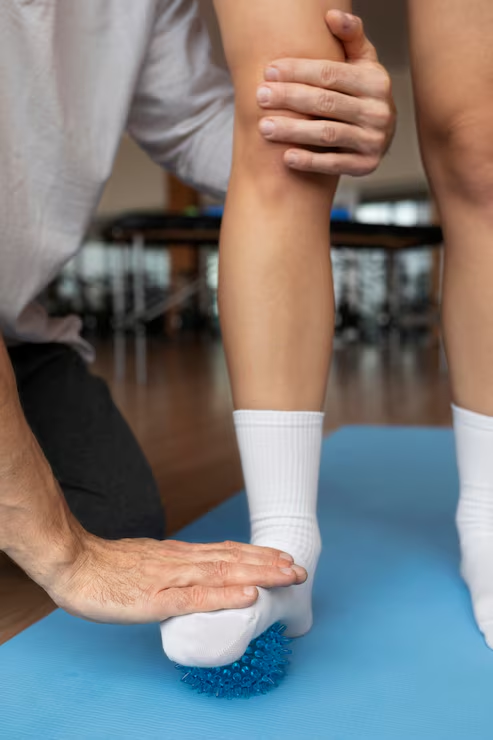
Recovery doesn’t end with surgery—it begins there, and the way you rehabilitate afterward determines how well you move, how confidently you return to activity, and how resilient your body becomes long term.
At RedGen Rehab, post-surgical rehabilitation follows a structured, physiotherapist-led approach focused on supporting tissue healing, restoring movement, rebuilding strength, and guiding a safe, confident return to daily life, work, and sport.
Who Post-Surgical Rehab Is For
RedGen Rehab supports clients following procedures such as:
• joint replacement
• arthroscopy
• ligament repair
• tendon repair
• spinal procedures after clearance
• fracture fixation
• soft tissue surgery
Whether you are early post-operative or still struggling weeks or months later, structured rehabilitation can make a significant difference.
Common Post-Surgical Challenges
After surgery, many people experience:
• pain or stiffness persisting longer than expected
• swelling or joint tightness
• reduced range of motion
• muscle weakness or inhibition
• altered movement patterns
• loss of confidence using the affected area
• fear of returning to activity
These issues are common and exactly what rehabilitation is designed to address.
The RedGen Approach to Post-Surgical Rehabilitation
Treatment follows the RedGen 4-Step Rehabilitation Framework: Assess, Relieve, Restore and Optimise.
Rehabilitation may include:
• hands-on physiotherapy
• soft tissue techniques
• joint mobilisation where appropriate
• acupuncture or dry needling where appropriate
• early activation and mobility exercises
• Class IV laser therapy when clinically indicated
• RedGen Prime™ full-body photobiomodulation to support recovery and inflammation control where appropriate
Exercises are introduced early where safe, with clear guidance and progression.
Recovery vs Rehabilitation
At RedGen, rehabilitation and recovery serve different roles:
• Rehabilitation focuses on restoring movement, strength, and function
through physiotherapy and exercise
• Recovery programmes focus on accelerating tissue healing, reducing
inflammation, and supporting systemic recovery
They can be used independently or together depending on your stage and needs.
Start Your Post-Surgical Rehabilitation
If you’re recovering from surgery and want a clear, structured plan to help you move confidently again, RedGen Rehab can support you.

ANKLE & ACHILLES PAIN
Ankle and Achilles pain can significantly limit walking, running, training, and sport, and if not managed properly, it often becomes persistent or repeatedly flares up.
At RedGen Rehab in Ponteland, physiotherapy focuses on understanding the root cause of your pain, reducing symptoms safely, and using structured rehabilitation and load management to rebuild strength and resilience—so you can return to activity with confidence and prevent the issue from coming back.
Common Types of Ankle & Achilles Pain
RedGen Rehab commonly helps with:
• Achilles tendinopathy
• reactive Achilles pain following a spike in activity
• chronic Achilles pain that has not responded to rest
• ankle sprains, acute or recurrent
• ongoing ankle stiffness or instability
• pain following immobilisation
• post-surgical ankle or Achilles rehabilitation
• overload-related pain from running, gym training, or sport
Pain may be felt:
• at the back of the heel or lower calf
• around the ankle joint
• during walking, running, or push-off
• first thing in the morning or after activity
• as stiffness, tightness, or sharp pain
Common Contributors
Common contributors include:
• sudden increases in training load or activity
• reduced ankle mobility or calf strength
• poor load tolerance of the Achilles tendon
• previous ankle sprains or incomplete rehabilitation
• foot mechanics and movement patterns
• prolonged inactivity followed by overload
• stiffness following surgery or immobilisation
• inadequate recovery between sessions
The RedGen Approach to Ankle & Achilles Pain
Treatment follows the RedGen 4-Step Rehabilitation Framework: Assess, Relieve, Restore and Optimise.
Rehabilitation may include:
• manual therapy and soft tissue treatment
• joint mobilisation where appropriate
• acupuncture or dry needling where indicated
• activity modification and load management
• RedGen Penta™ laser therapy when clinically indicated
• RedGen Prime™ full-body photobiomodulation where appropriate
• progressive calf and ankle strengthening
• tendon loading strategies
• return-to-running or return-to-sport guidance
Incomplete strengthening is one of the main reasons ankle and Achilles pain returns, so this phase is treated seriously
When to Seek Help
Consider assessment if:
• pain has lasted longer than 2–3 weeks
• symptoms return each time you increase activity
• stiffness or pain is worsening
• pain is affecting walking, training, or sport
• you have had previous ankle injuries
• rest has not resolved the issue
Early, structured management often leads to faster and more complete recovery.
Book an Assessment
If ankle or Achilles pain is limiting your movement, training, or confidence, RedGen Rehab can help.

PERSISTENT & CHRONIC PAIN
Persistent or chronic pain can be frustrating, exhausting, and confusing—especially when scans appear normal, past treatments haven’t worked, or pain keeps returning despite your efforts.
At RedGen Rehab in Ponteland, physiotherapy-led care focuses on helping people understand what may be driving their pain, rebuild confidence in movement, and improve their body’s ability to handle daily life, work, and activity.
Rather than chasing pain or pushing through it, the approach is centered on restoring function, control, and long-term resilience.
What Persistent or Chronic Pain Is
Pain is generally considered persistent or chronic when it lasts longer than three months or continues beyond expected tissue healing times.
Common presentations include:
• ongoing low back or neck pain
• long-standing joint pain
• pain following injury that never fully resolved
• flare-ups that come and go unpredictably
• pain that increases with stress, fatigue, or poor sleep
• pain that does not match scan findings
Chronic pain is real pain, but it is often influenced by more than tissue damage alone.
Common Contributors
Persistent pain commonly develops through a combination of factors such as:
• repeated flare-ups without full recovery
• prolonged guarding or fear of movement
• reduced strength and movement confidence
• nervous system sensitisation
• disrupted sleep or high stress levels
• inconsistent or overly aggressive rehab attempts
• inactivity followed by overload
Understanding these contributors is the first step toward meaningful change.
The RedGen Approach to Persistent Pain
Treatment follows the RedGen 4-Step Rehabilitation Framework: Assess, Relieve, Restore and Optimise.
Your rehabilitation may include:
• gentle manual therapy and soft tissue work
• joint mobilisation where appropriate
• acupuncture or dry needling where indicated
• graded exposure to movement
• pain education and flare-up guidance
• RedGen Prime™ full-body photobiomodulation where appropriate
• RedGen Penta™ laser therapy for localised pain modulation when indicated
• a gradual exercise programme tailored to tolerance
Progress is guided by your response, not by rigid timelines.
When to Seek Help
You may benefit from assessment if:
• pain has lasted longer than three months
• you feel unsure how to move safely
• you have tried physiotherapy before without lasting results
• pain flares unpredictably
• scans do not explain your symptoms
• pain is affecting sleep, mood, or confidence
Book an Assessment
If persistent pain is limiting your life or confidence in movement, RedGen Rehab can help you understand what may be driving it and how to move forward safely.
If you’re unsure whether physiotherapy is right for your symptoms, you’re
welcome to contact the clinic for guidance.

HIP & GROIN PAIN
Hip and groin pain can affect walking, sitting, training, sport, and even sleep, and it is often misunderstood, mislabelled, or left unresolved.
At RedGen Rehab in Ponteland, physiotherapy assessment focuses on identifying whether symptoms are coming from the hip joint, surrounding muscles and tendons, the lower back, or the nervous system, allowing for a structured rehabilitation plan that reduces pain, restores movement, and rebuilds strength for long-term recovery.
Where Hip & Groin Pain Is Commonly Felt
You may feel pain:
• deep in the groin or front of the hip
• on the outside of the hip
• in the buttock or upper thigh
• during walking, running, or getting out of a car
• when standing after sitting
• at night when lying on one side
• during sport-specific movements such as kicking, cutting, or sprinting Understanding where and when pain occurs helps guide effective treatment.
Common Causes & Contributors
Common contributors include:
• Greater Trochanteric Pain Syndrome (GTPS)
• tendon overload including gluteal or hip flexor tendinopathy
• reduced hip strength or control
• joint-related irritation including early osteoarthritis
• referred pain from the lower back
• groin strains or overload
• postural or load-related factors such as prolonged sitting or sudden increases in activity
The RedGen Approach to Hip & Groin Pain
Treatment follows the RedGen 4-Step Rehabilitation Framework: Assess, Relieve, Restore and Optimise.
Your rehabilitation may include:
• detailed history and movement assessment
• soft tissue therapy
• joint mobilisation where appropriate
• acupuncture or dry needling where indicated
• RedGen Penta™ laser therapy when clinically indicated
• RedGen Prime™ full-body photobiomodulation where appropriate
• progressive glute, hip, and pelvic strengthening
• control and stability work
• gradual return to walking, running, gym, or sport
Progression is based on response — not rigid timelines.
When to Seek Help
Consider physiotherapy if:
• pain has persisted longer than a few weeks
• pain worsens with activity or at night
• symptoms keep returning
• walking, training, or daily tasks feel limited
• you are unsure how to exercise safely
Early assessment often prevents prolonged issues.
Book an Assessment
If hip or groin pain is limiting your movement or confidence, RedGen Rehab can help identify the cause and guide effective recovery.